
Remembering the Qur’an
You are my soul and spirit, you are my Fatiha-chanter, become altogether the Fatiha, so that I may chant you in my heart.
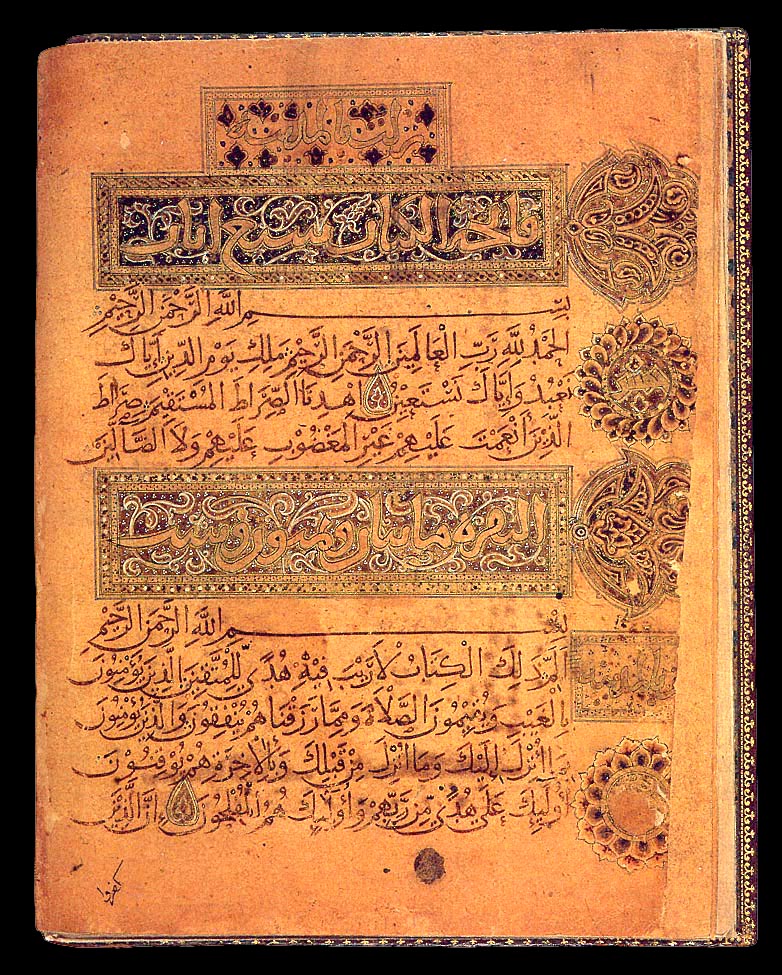
--Mawlana Jalaluddin RumiA translation of the Fatiha by Ma Dexin 馬德新 (1794-1874) from his work, A Direct Explanation of Treasured Mandate of the True Scripture (Baoming zhenjing zhjie 寶命真經直解) 1) I recite the most beneficent, the most intimate, the True Lord’s name and begin. (2) This praise all returns to the most revered and respected, He transforms and nourishes all the worlds. (3) The most beneficent, the most intimate, (4) controller of the true world. (5) Serve alone the most revered and respected, and only look for the most revered and respected one’s assistance. (6) Indeed! Most revered and respected one lead your foolish servant to the straight path. (7) As for the straight path, the True Lord specially entrusts a great responsibility, not for those who excessively transgress, also not for those who do not turn back.
Learn to recite
Learn to recite the Fatiha, the opening chapter of the Qur’an, and the short chapters al-`Asr and al-Ikhlas. If you want to explore the meanings of these chapters, please click on the chapter name below. It will take you to the amazing website The Qur’an Arabic Corpus where you can explore the language of the Qur’an.
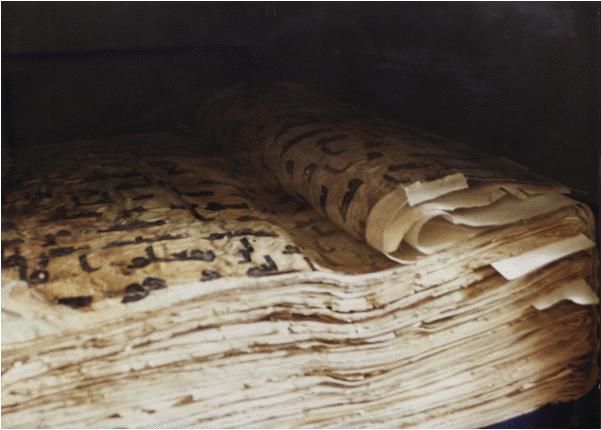
Said to be from the Uthmanic period. It dates to the 8th century. Qur’an manuscripts have been dated to as early as twenty five years after Muhammad’s (swt) death.
al-Fatiha:
Aw-`oo-dhoo bil-laa-hi mi-nash-shay-tawn ir-raw-jeem;
1. Bis-mil-laah ir-Rah-maan ir-Raw-heem
2. Al-ham-doo-lil-laah ir-Rab-bil al-`ah-meen
3. Ar-Rah-maan ir-Raw-heem
4. Maa-li-ki yawm id-deen
5. Ee-yaa-ka na`a-bu-du wa ee-yaa-ka nahs-tah-’een
6. Eh-di-naas sih-raw-tawl mus-tah-qeem
7. As-sih-raw-tawl lah-dhee-nah an-‘am-tah ah-lay-him
Ghay-ril magh-doo-bi `ah-lay-him wa lahd-daaleen
Ameen
The Opening:
I take refuge with God the All-Merciful from the cast out, rebellious one
In the name of God—Who is Tenderly Compassionate, Infinitely Merciful—
Praise God, the Sustainer of all Worlds,
The Tenderly Compassionate, the Infinitely Merciful,
Sovereign of the Day of Divine Awakening.
We worship only You and rely upon You alone.
Guide us on the direct path,
the path of those who have accepted Your gift of sublime guidance,
not those who have experienced Your awesome correction
¬ those who have wandered away.
Listen to Al-Fatiha recited
We use the above translation of the Fatiha at the Toronto Unity Mosque. It is adapted from the Fatiha as translated by the Nur Ashki Jerrahi Community. All translations are interpretations. Our translation speaks to the way we understand God. For instance, why do we adopt the Nur Ashki use of “awesome correction” instead of the more common “wrath”? Because God’s wrath can only be a function of God’s mercy. “Wrath” is the guidance you need when God has to pull you by the scruff of your neck and let you know you have gone too far. It can only be an expression of Divine Love. Thus, “awesome correction” is more suited than “wrath.”
Aw-`oo-dhoo bil-laa-hi mi-nash-shay-tawn ir-raw-jeem
Bis-mil-laah ir-Rah-maan ir-Raw-heem
al-`Asr
1. Wal `awsr
2. In-nal in-saa-na la-fi khusr
3. Il-la al-la-dhee-na a-ma-noo
4. wa `a-mi-loos saw-li-haw-ti
5. wa ta-wa-sao bi-l-haq-qi
6. wa ta-wa sao bis -sawbr
al-Ikhlas
1. Qul hu-wa Al-la-hu a-had
2. Al-la-hus Sawmad
3. Lam ya-lid wa lam yu-lad
4. Wa lam yakun-la-hu ku-fu-wan a-had
Listen to al-Asr recited
Listen to al-Ikhlas recited
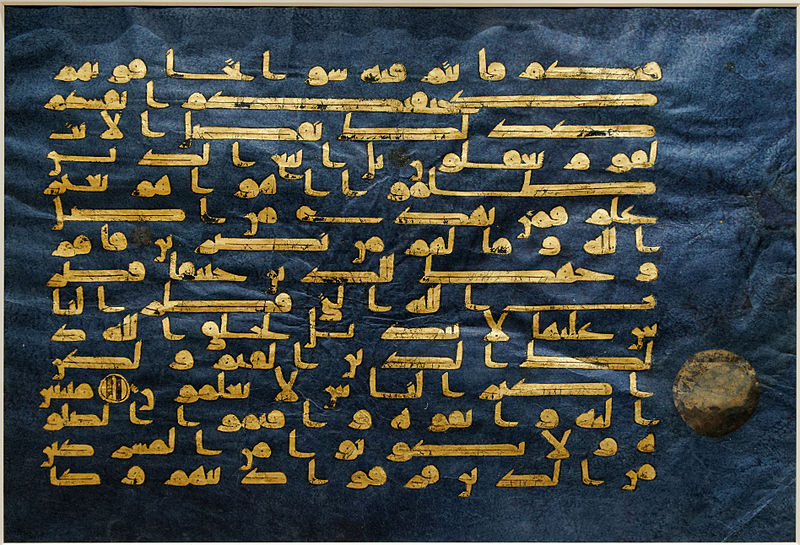
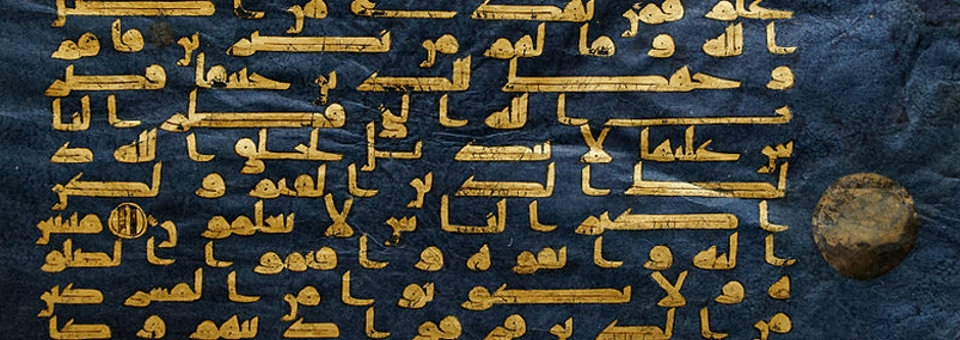
The Blue Qur’an is a Tunisian manuscript in Kufic script from the 9th - early 10th century. It is Gold ink on parchment colored with Indigo.
References:
Our reciter prefers to remain anonymous. Rumi quote from AJ Arberry’s Mystical Poems of Rumi